Tamil is one of humanity’s oldest living languages, with a literary heritage spanning more than 2,000 years. In today’s digital-first era, Tamil literacy has taken on a renewed significance—not just for cultural preservation but also for modern communication, professional development, and academic success. Fortunately, with the rise of digital tools, online resources, and modern education technologies, Tamil learning is becoming more engaging, accessible, and personalized than ever before.
This blog explores how digital platforms, EdTech innovations, and AI-powered tools are revolutionizing Tamil literacy and shaping the future of language learning.
The Current State of Tamil Literacy
Tamil literacy has grown steadily across India and the global Tamil diaspora. However, challenges persist—particularly in traditional learning environments that rely heavily on textbooks and memorization.
Challenges in Traditional Learning
Traditional Tamil learning methods often face barriers such as:
- Outdated textbooks in many government schools
- Lack of personalized teaching for different learning speeds
- Urban–rural learning divide, especially in remote Tamil-speaking communities
- Low student engagement due to non-interactive formats
- Limited exposure to modern Tamil literature and digital content
These limitations highlight the importance of modern, technology-supported approaches.
Importance of Preserving the Tamil Language
Tamil is more than a mode of communication—it is a symbol of identity. Strengthening Tamil literacy ensures:
- Cultural and literary heritage is passed to future generations
- Stronger academic performance in Tamil-medium and bilingual schools
- Cognitive development through multilingual learning
- The language adapts and thrives in digital spaces
Digital education plays a crucial role in preserving Tamil while making it relevant in a globalized world.
Digital Transformation in Education
The digital revolution has changed how we learn, communicate, and engage with information. Tamil education is no exception.
Rise of EdTech Platforms
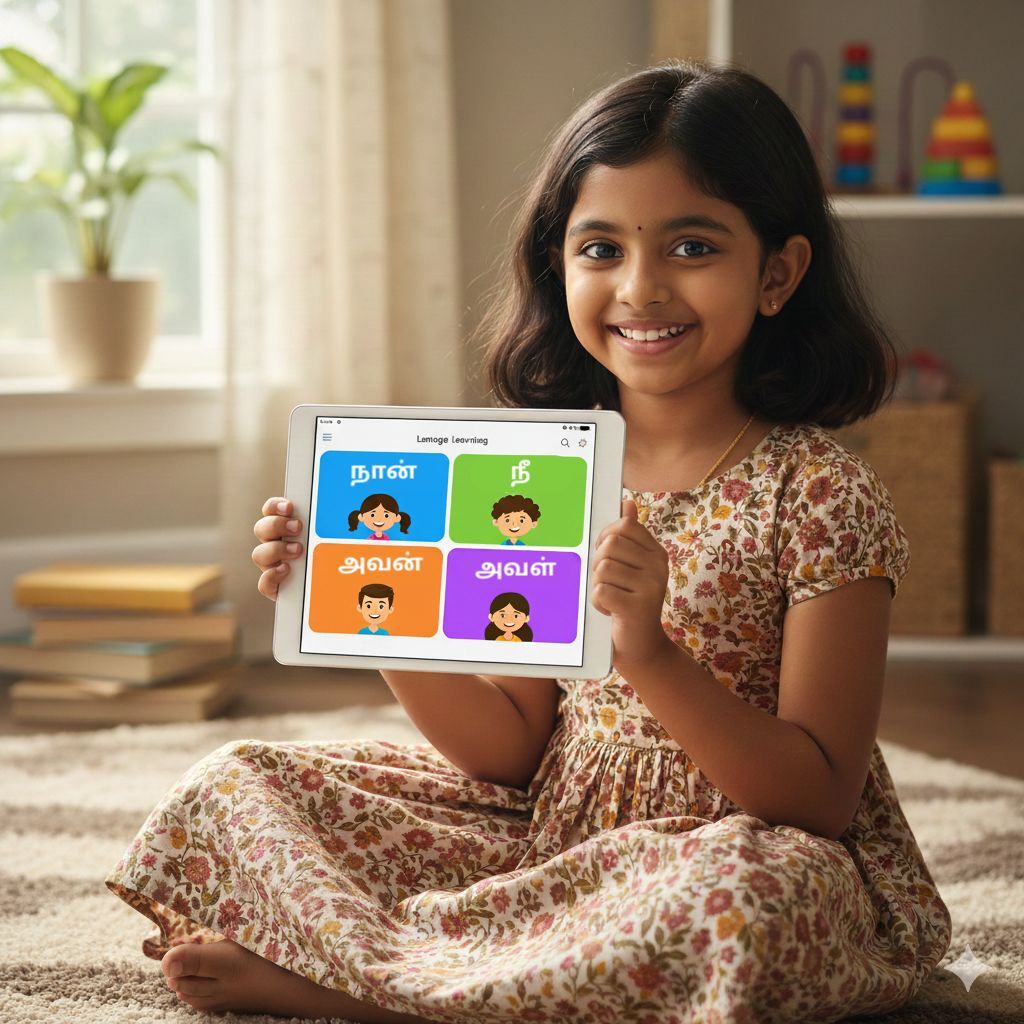
EdTech platforms like Maadhyamik, Byju’s, and language-learning apps have made it easier for students to learn Tamil at their own pace. Increased smartphone penetration and affordable data have fueled this growth. Learners now prefer:
- On-demand video lessons
- Mobile learning
- Micro-learning modules
- Interactive content and quizzes
Tamil learners—from school children to working professionals—are embracing these new tools.
Accessibility and Inclusivity for All
Digital tools break traditional barriers by ensuring:
- Learning from anywhere (village, city, or abroad)
- Flexible schedules for working learners
- Affordable or free access to Tamil resources
- Community learning through WhatsApp, Telegram, and online groups
Tamil learning is no longer restricted to classrooms.
Personalized Learning Powered by Technology
One of the biggest advantages of digital learning is personalization.
AI and analytics help learners:
- Identify strengths and weaknesses
- Track reading and writing progress
- Practice tailored exercises
- Learn through gamified levels
This adaptive learning model boosts both confidence and Tamil proficiency.
Key Digital Tools Driving Tamil Literacy
Digital tools are transforming Tamil education across reading, writing, speaking, and comprehension.
1. Mobile Apps for Tamil Learning
Apps make Tamil learning engaging, especially for children and beginners. Features include:
- Vocabulary flashcards
- Interactive grammar worksheets
- Gamified Tamil challenges
- Pronunciation guides
- Daily learning reminders
- Tamil handwriting practice modules
Such apps make Tamil language acquisition fun and accessible.
2. E-Books and Audiobooks
Tamil e-books and audiobooks help learners improve reading and listening skills simultaneously.
Benefits include:
- Instant access to thousands of Tamil books
- Built-in dictionaries for word meanings
- Adjustable font sizes and annotation tools
- Audiobooks for multisensory learning
- Exposure to classic and modern Tamil literature
Platforms such as Maadhyamik curate structured Tamil learning materials for all age groups.
3. Speech-to-Text & Text-to-Speech Tools
Assistive technologies are game-changers for Tamil education.
- Speech-to-text helps students practice speaking and convert their voice into written Tamil.
- Text-to-speech helps improve listening, pronunciation, and comprehension.
- Grammar-checking AI tools assist with writing accuracy.
- Accessibility features support students with learning disabilities.
These tools improve reading and writing skills in Tamil significantly.
Integration with Formal Education
To maximize impact, Tamil learning tools must integrate with formal education.
Blended Learning Models
Blended learning combines traditional classroom teaching with digital solutions such as:
- Smart classrooms
- Online assessments
- Recorded lessons
- AI-based feedback systems
- Virtual assignments
This model strengthens learning consistency and student participation.
Teacher Empowerment Through Technology
Teachers play a vital role in Tamil literacy—and digital tools amplify their capabilities:
- Ready-to-use Tamil lesson plans
- Interactive teaching materials
- Online grading tools
- Personalized student feedback
- LMS platforms for classroom management
When teachers are empowered, students benefit directly.
Future Trends in Tamil Literacy
The future of Tamil learning will be shaped by innovation.
AI and Natural Language Processing (NLP)
AI will introduce advanced capabilities such as:
- AI-powered Tamil tutors
- Instant Tamil grammar correction
- Voice-based Tamil conversation practice
- Automated essay scoring
- Personalized learning recommendations
These innovations will make Tamil literacy more interactive and efficient.
Gamification and Virtual Reality (VR)
Gamification increases motivation, while VR makes learning immersive.
Future Tamil learning innovations may include:
- VR-based Tamil storytelling adventures
- 3D cultural simulations
- Tamil word puzzles with rewards
- Interactive Tamil history and geography games
These trends will redefine how students engage with the Tamil language.
Conclusion — Technology is the Key to Advancing Tamil Literacy
As the world becomes more digital, Tamil literacy must evolve alongside it. From mobile apps and e-books to AI-based tools and VR learning, technology is making Tamil education more engaging, accessible, and effective.
By integrating digital solutions into formal education and community learning, we can ensure that Tamil remains vibrant, relevant, and celebrated for generations to come.
Frequently Asked Questions (FAQ)
1. How do digital tools help improve Tamil literacy?
Digital tools make Tamil learning more interactive, accessible, and personalized through mobile apps, AI-based feedback, e-books, and speech technologies. They support reading, writing, speaking, and comprehension skills.
2. What are the best apps for learning Tamil online?
Popular Tamil learning apps include Maadhyamik, Duolingo (Tamil-specific modules), Google Read Along, and various vocabulary and handwriting apps designed for school children.
3. Can digital learning replace traditional Tamil education?
Digital learning does not replace traditional teaching—it enhances it. Blended learning models combine classroom instruction with technology to create a more effective learning experience.
4. How do speech-to-text tools help Tamil learners?
Speech-to-text tools convert spoken Tamil into written form, helping students practice pronunciation, improve fluency, and develop writing skills.
5. What is the future of Tamil literacy in the digital age?
The future includes AI-driven Tamil tutors, gamified Tamil learning, VR-based education, and advanced NLP tools for grammar correction and personalized learning.
References
- Government of India, Ministry of Education – Digital Education Initiatives
- UNESCO Reports on Digital Literacy & Multilingual Education
- ASER (Annual Status of Education Report) – Tamil Nadu Learning Outcomes
- Research Papers on Tamil NLP and AI Language Models
- Maadhyamik Tamil Learning Platform – Digital Resource Library